Sustainable Manure Management for Healthy Farms and Communities
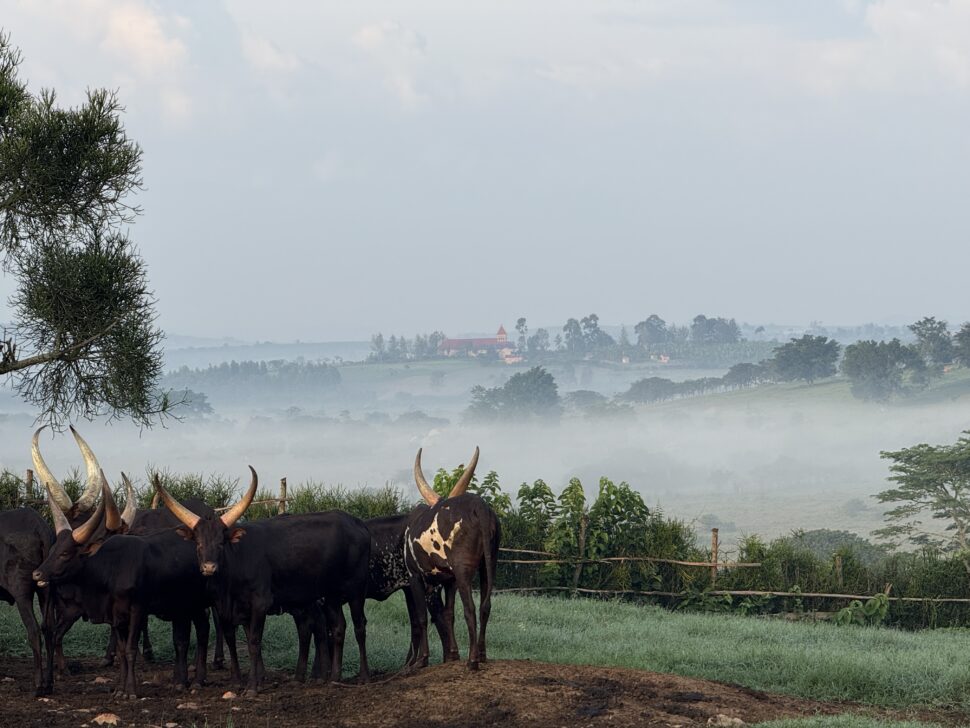
The CIRNA project supports smallholder farmers in East Africa in sustainably managing livestock manure. By improving nutrient use and handling practices, it increases agricultural productivity, reduces health risks—especially for women and children—and contributes to climate resilience and food security.
© VSF Germany
Project Overview
-
Circularity of Nutrients in Agroecosystems and Co-benefits on Animal and Human Health Project (CIRNA)
Official Title
-
SOR4D – Initiative by the Swiss Agency for Development and Cooperation and the Swiss National Science Foundation
Donor
-
CHF 84,842
Budget
-
April 2024 – March 2027
Duration
Background
Smallholder farmers in East Africa play a central role in regional food security, yet their productivity is increasingly constrained by depleted soils and limited access to affordable plant nutrients. The use of synthetic fertilisers remains low due to financial barriers, which have been further exacerbated by global shocks such as volatile energy prices and the war in Ukraine. As a result, food security and nutrition in low- and middle-income countries are increasingly at risk.
Livestock manure represents a widely available and cost-effective alternative for improving soil fertility and crop yields. However, its potential remains largely underutilised due to inadequate handling and management practices. Poor manure management leads to nutrient losses and environmental pollution and poses significant health risks—particularly for women and children, who are often responsible for manure handling. At the same time, conventional extension services rarely address manure management in its full complexity, which spans agronomic, environmental, social, economic, and health dimensions.
The CIRNA project responds to these interconnected challenges by advancing an integrated, climate-smart approach to nutrient circularity in mixed crop–livestock systems. Building on prior research that demonstrates the benefits of manure use—but also highlights the lack of practical and scalable models for smallholder contexts—CIRNA seeks to identify and promote manure management practices that simultaneously enhance nutrient availability, reduce environmental and health risks, and remain feasible for smallholder farmers.
Through a multidisciplinary and transdisciplinary research approach, CIRNA balances biophysical, social, health, and economic perspectives to develop locally adapted, socially inclusive, and environmentally sound solutions in Kenya and Uganda. Funded through the Solution-oriented Research for Development (SOR4D) programme of the Swiss Agency for Development and Cooperation and the Swiss National Science Foundation, the project contributes essential evidence for a sustainable, climate-smart, and healthy transformation of agricultural and food systems in East Africa.
© VSF Germany
© VSF Germany
Project Description and Results
CIRNA adopts a holistic, transdisciplinary approach involving research, capacity building, and stakeholder co-creation to improve manure management practices. In Uganda, VSF Germany leads implementation efforts with a strong emphasis on inclusivity, local relevance, and knowledge transfer.
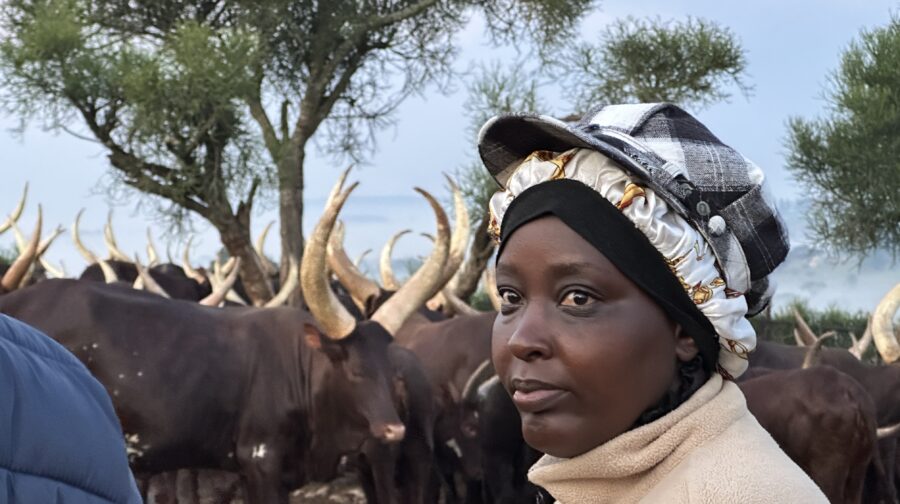
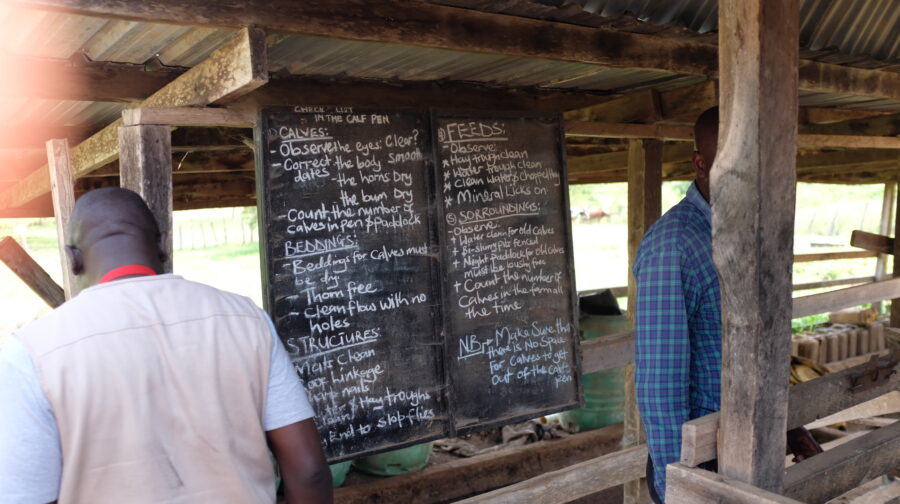
In 2024, the project began with a national inception meeting that brought together over 25 technical stakeholders to align on the project’s objectives, methods, and implementation strategy. A comprehensive stakeholder mapping and engagement process followed, identifying 66 smallholder farmers, 17 civil society and community-based organisations, and 22 technical staff across the districts of Mpigi, Mukono, and Buikwe. These actors form a growing network committed to promoting sustainable manure management practices. A target farm selection and reconnaissance exercise was then carried out, resulting in the identification of 20 farms per district. These farms will serve as demonstration sites and form the foundation of a farmer-to-farmer knowledge exchange system. The selected farmers are being trained and supported to act as resource persons within their communities, sharing experiences and encouraging peer adoption of improved manure management practices.
Ongoing engagement activities with these trainers and their communities aim to ensure that all innovations are context-appropriate, gender-sensitive, and grounded in local knowledge. This collaborative approach is helping to build a robust foundation for farmer-led innovation, evidence generation, and the broader adoption of climate-smart practices in Uganda.
Economic Impact and Sustainability
By enhancing nutrient circularity and promoting cost-effective fertiliser alternatives, CIRNA directly contributes to smallholder income stability and long-term soil productivity. The project supports farmers in reducing reliance on expensive synthetic inputs while improving crop yields, thereby contributing to food security and poverty reduction.
The establishment of district-level demonstration farms and training networks helps embed best practices within farming communities, increasing the likelihood of lasting adoption. Furthermore, by addressing the health risks associated with manure handling—particularly for women and children—the project also helps reduce preventable illness and its associated economic burdens. Through multi-stakeholder collaboration and alignment with national strategies for climate resilience and agricultural development, CIRNA is well positioned to catalyse scalable and sustainable impacts in Uganda and beyond.