Fostering Peace and Sustainable Livelihoods in South Sudan
The project supports the creation of an inclusive and peaceful society in South Sudan by promoting reconciliation, social cohesion, and sustainable natural resource management. It links peace-building with practical solutions to food insecurity, poverty, and environmental degradation.
© VSF Germany
Project Overview
-
Fostering Peace and Sustainable Livelihoods in South Sudan (FOPNAG)
Official Title
-
European Union (The European Commission’s Directorate-General for International Partnerships (DG INTPA))
Donor
-
EUR 3,150,000
Budget
-
January 2024 – July 2026
Duration
Background
Decades of conflict and the proliferation of small arms have left South Sudan deeply unstable, with violence and poverty hindering development. In Budi and Yei counties, food insecurity is a major issue despite the population’s reliance on agriculture. In Budi and Yei counties, over 60% of the population faces Crisis (IPC Phase 3) or worse levels of food insecurity due to conflict-related displacement and environmental degradation in areas like Kidepo Game Reserve and Lantoto National Park.
Competition over land, water, and grazing areas fuels local tensions, exacerbated by cattle theft, deforestation, and poaching. Implemented in partnership with the Enjojo Foundation, the project addresses these root causes of conflict by promoting peacebuilding, sustainable livelihoods, and responsible natural resource management.
© VSF Germany
© VSF Germany
Project Description and (expected) Results
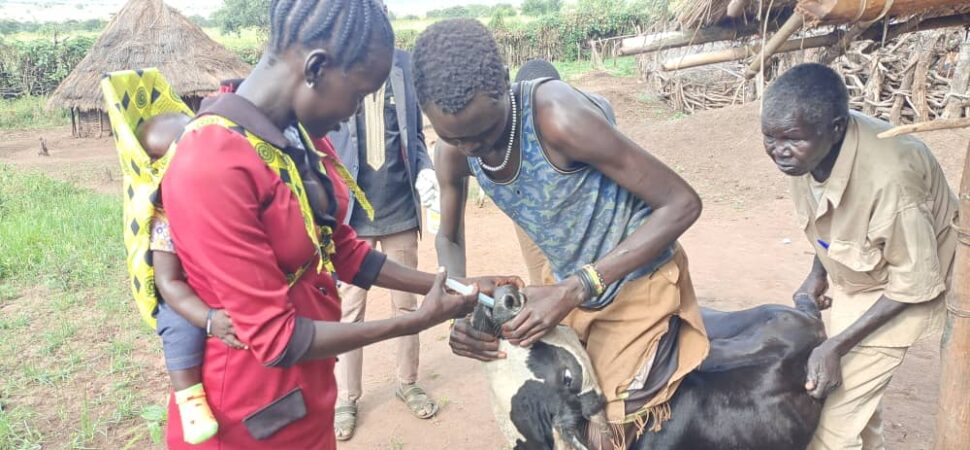
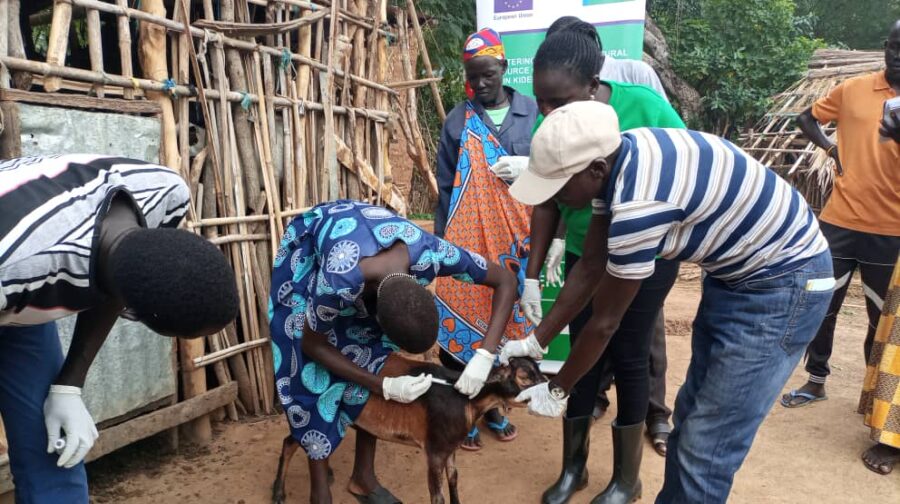
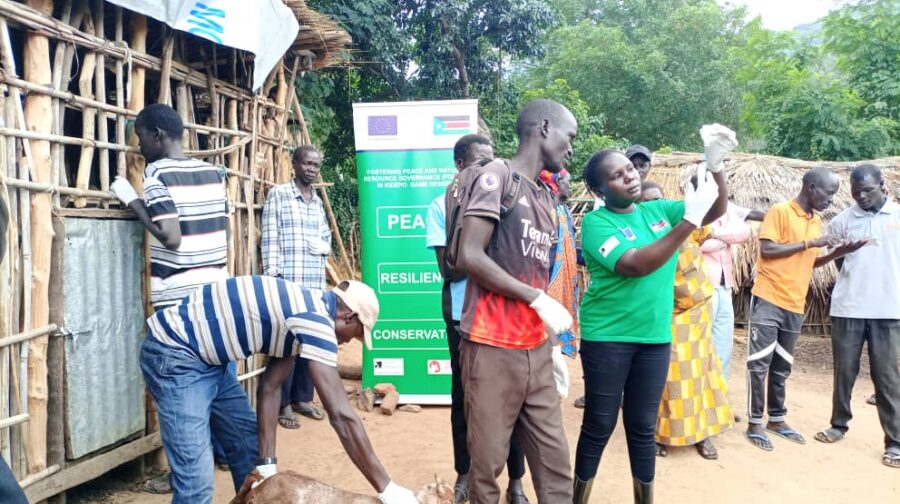
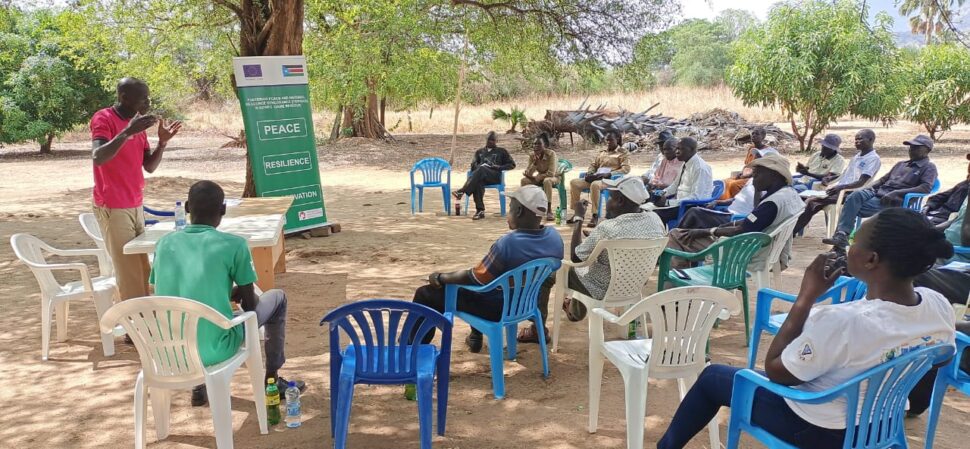
The project aims to build peaceful and resilient communities by integrating local reconciliation efforts with sustainable livelihoods. It strengthens local conflict resolution through training peace scouts, community leaders, and traditional authorities to prevent and resolve disputes. Economic resilience will be enhanced through beekeeping and honey value chains, training 40 participants (20 women, 20 men), and through fee-based veterinary services delivered by trained Community Animal Health Workers (CAHWs). These interventions reduce dependence on unsustainable practices and help increase the income of livestock owning households in the community, particularly through the services provided by Community Animal Health Workers (CAHWs).
Special focus is placed on empowering women, youth, and marginalized groups to participate in peace-building and governance. By improving local capacities, generating economic opportunities, and protecting natural resources, the project supports long-term peace and sustainability in communities near Kidepo and Lantoto.
The project will deliver measurable outcomes across three key areas. First, conflict resolution mechanisms will be strengthened through grassroots early warning systems and capacity-building for local institutions, enabling timely mediation and prevention. Second, local economies will be revitalized: training in animal health services and beekeeping will create income streams and reduce reliance on depleted resources. Communities will benefit from veterinary services, disease prevention programs, and access to honey markets. Third, inclusive participation will be fostered, especially among women, youth, and marginalized groups, in peace, political, and development processes. The project supports their active involvement in local governance and decision-making, ensuring that peace-building and development efforts are representative and sustainable. These outcomes will together foster greater social cohesion, improve food and income security, and enhance environmental stewardship across the target regions.
© VSF Germany
(Expected) Economic Impact and Sustainability
The project is laying the groundwork for long-term economic resilience in South Sudan by combining peace-building with practical livelihood interventions. In its first year, the project trained 40 Community Animal Health Workers (CAHWs)—equipping them with skills, starter kits, and veterinary supplies—to deliver essential livestock health services. These services not only support community animal health but also generate income through a fee-based model, creating sustainable micro-enterprises.
Additionally, eight Village Savings and Loan Associations (VSLAs) were established, empowering 200 community members—over half of whom are women—to pool resources, access credit, and start small businesses. These groups are designed to grow into financially independent units linked to formal institutions. Though only 26% of households currently rely on two or more income streams, the project’s ongoing efforts to promote diversified livelihoods—such as beekeeping, poultry farming, and petty trade—are expected to drive this number upward.
Through upcoming training in entrepreneurship, sustainable natural resource management, and community-led development planning, the project is laying the foundation for a self-reliant rural economy—one that is both environmentally responsible and socially inclusive.